Showing posts with label february. Show all posts

Thursday, February 16, 2012

Now You'll Know: Why Does February Only Have 28 days?

     February is a month full of love, history, and even mystery for some! I remember growing up, always being confused about February only having 28 days. Teachers explained it as a mere leap year issue, and left it at that. Until today, I've never actually understood the purpose behind poor February being shorter than other months. After speaking with a friend about this topic, she encouraged me to do some research on it, and help educate the rest of the curious population! Ever been afraid to ask a "stupid" question? Well, the way I see it, the only "stupid" question, is one that is never asked! After some research, here is what I discovered! Enjoy! :) 

     The moon takes 29 1/2 days to rotate around the Earth, while the Earth takes 365 1/4 days to rotate around the sun. In the very first calendars (which were created thousands of years ago by the ancient Romans) February didn't even exist because the Romans originally based their calendars on the moon's rotation instead of the Earth's!

     The first calendar, created by Rome's founder Romulus, had ten months that added up to 304 days — which is not quite enough for a full solar rotation. Numa Pompilius, Rome's king after Romulus, tried to even out the difference by adding two new months to the calendar: January and February. Numa Pompilius's version of the calendar now had 355 days, so he created a new month called "Mercedinus" that would come after February every other year in order to keep up with the solar rotation!
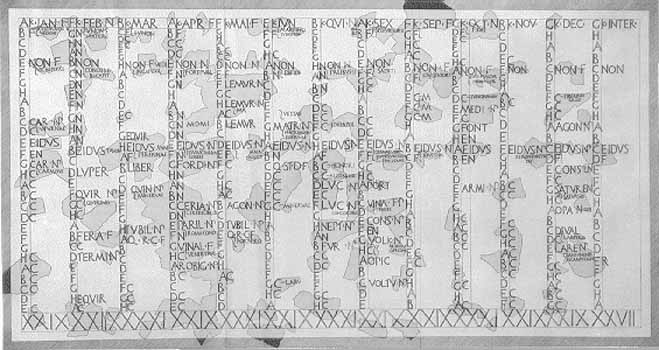
      However, this was a very confusing system (I would agree, as I am already lost!)  and, in 45 BC, Rome's leader Julius Caesar got rid of Mercedinus completely.!Instead, he took those extra ten days and placed them at the end of the months they already had — some months now had 31 days, some had 30, and February, due to the loss of Mercedinus, would have 29. This system was called the "Julian calendar."

     In 1582, Pope Gregory XIII noticed that the Julian calendar didn't take into account that 1/4 of a day included in the solar rotation. So he created the concept of the leap year in order to keep the solar calendar synchronized — February would now have 28 days a year, except in years divisible by four, in which they would have 29. So that the solar rotation is still covered, including the 1/4th of a day that was left out! These changes became the "Gregorian Calendar," which is the system we use to this day!

     There you have it! We can now all continue on with our days, feeling a bit wiser than before! Stay tuned for more fun facts and green ideas! Until next time, keep it clean! :)

Thursday, January 26, 2012

Now You'll Know: The History of Black History!


   The majority of the American population grew up hearing about and studying Black History Month. When I was in school, we devoted a whole month to learning the importance of Black History Month, and its purpose. As I've grown, and been out of school, I do not see/hear/discuss this topic near as much as I would like to during Black History Month! Today, I want to discuss a little bit of history, as well as what this holiday means to all of us, just to jog the memory of those of us who don't have it brought to our attention each year by history teachers. :) Black History dates far back into the 1600's. In 1619 The first African slaves arrived in Virginia. Let me be the FIRST to say, how PROUD I am that times are different! We, as a country, have come so unbelievable far! I don't know about you guys, but I am proud to call this place home!
     "We owe the celebration of Black History Month, and more importantly, the study of black history, to Dr. Carter G. Woodson. Born to parents who were former slaves, he spent his childhood working in the Kentucky coal mines and enrolled in high school at age twenty. He graduated within two years and later went on to earn a Ph.D. from Harvard. The scholar was disturbed to find in his studies that history books largely ignored the black American population-and when blacks did figure into the picture, it was generally in ways that reflected the inferior social position they were assigned at the time.
     Woodson, always one to act on his ambitions, decided to take on the challenge of writing black Americans into the nation's history. He established the Association for the Study of Negro Life and History (now called the Association for the Study of Afro-American Life and History) in 1915, and a year later founded the widely respected Journal of Negro History. In 1926, he launched Negro History Week as an initiative to bring national attention to the contributions of black people throughout American history.
     Woodson chose the second week of February for Negro History Week because it marks the birthdays of two men who greatly influenced the black American population, Frederick Douglass and Abraham Lincoln. However, February has much more than Douglass and Lincoln to show for its significance in black American history. For example:


  • February 23, 1868:
    W. E. B. DuBois, important civil rights leader and co-founder of the NAACP, was born.
  • February 3, 1870:
    The 15th Amendment was passed, granting blacks the right to vote.
  • February 25, 1870:
    The first black U.S. senator, Hiram R. Revels (1822-1901), took his oath of office.
  • February 12, 1909:
    The National Association for the Advancement of Colored People (NAACP) was founded by a group of concerned black and white citizens in New York City.
  • February 1, 1960:
    In what would become a civil-rights movement milestone, a group of black Greensboro, N.C., college students began a sit-in at a segregated Woolworth's lunch counter.
  • February 21, 1965:
    Malcolm X, the militant leader who promoted Black Nationalism, was shot to death by three Black Muslims."
  •  
     As you can see, Black History Month is one of the most inspirational Holidays in America. It teaches and inspires children and adults of all nationalities. Not only can we establish a more peaceful nation, but by educating the future generations, we're allowing a much easier life for our kids, and grand kids. I'll wrap this up with a few inspiring words from an intelligent man, Mr.Martin Luther King. Until next time, keep it clean!