Tuesday, July 23, 2013

Easy! Make Your Own Salad Dressing


Summer is the perfect time for cool, crisp salad. As convenient as bottled dressing is, why waste those lovely greens on plain old ranch? All you need is a blender and a few ingredients to bypass the bottled for chef-approved, easy dressings.

Spicy Tomato Salsa
3 roma tomatoes
2 tomatillos
1/4 white or yellow onion
2 jalapenos
1/2 habanero
juice from 1/2 a lime
handful cilantro

Wash and roughly chop all ingredients, put in a blender and pulse for 20 seconds, less if you want it a bit more chunky.

Savory Tahini Dressing
1/4 cup tahini
1 tablespoon lemon juice or apple cider vinegar
1 tablespoon soy sauce
1 tablespoon nutritional yeast
1 clove garlic
water to thin it out, if desired

Put all ingredients in a blender and mix, or whisk with a fork until combined. Tahini is sesame seed butter, found in the international aisle or peanut butter aisle at the grocer. It's used mainly in middle eastern food like hummus, or to top falafel. It has a light and earthy flavor. This dressing is super rich and almost cheesy, and works great on heavier greens like kale and collards.


Raspberry Dressing
1 cup fresh or frozen berries
1 packet stevia
2 tablespoons olive oil
1/4 cup lemon juice
juice from 1/2 an orange or one clementine

Put all ingredients into a blender and mix until smooth. This sweet and tart dressing is great with spinach, red onions and blue cheese.

Basic ingredients can combine in hundreds of ways to make new enjoyable dressings. Mix and match a fruit or vegetable with fat (oil, nut butter, avocado) and an acid (vinegar, lemon or lime juice) and blend. Salad dressing is really that simple. See what you come up with, you may surprise yourself with a new favorite! Enjoy your summer lunches, and until next time, keep it clean!

Tuesday, July 16, 2013

Homemade Hair Conditioner

Making your own spa-quality treatments at home is easy and surprisingly cheap once you know which ingredients matter the most. Because of my thick, curly and long hair, conditioner had long been something I allowed myself to splurge on to keep my hair healthy. Most conditioner recipes are one-time treatments or masks. Here's a quick and easy recipe you can use daily to save your scalp from chemicals and save your wallet some dinero.

Homemade Hair Conditioner
Old shampoo bottle
2 cups warm filtered water
4 tsp olive, avocado or coconut oil
2 tsp jojoba, grapeseed or sweet almond oil
5 drops essential oil of your choice

Combine all ingredients of choice and pour into the old shampoo bottle using a funnel or a measuring cup with a spout. 
TO USE: Wet your hair with warm water in the shower. Shake up your bottle of conditioner to mix and apply liberally to scalp, massaging it in. Flip your hair over and apply from the base of the scalp upwards. Finally, apply directly to the ends of your hair. Let sit for 1-2 minutes then wash out with moisturizing shampoo or baking soda rinse.

The coconut and/or olive oil are the real moisturizers in this recipe. Coconut, avocado and olive oil all have the same amino acid chains that the human body naturally creates to moisturize your skin, so they are exactly right to penetrate your hair. The more moisture in your hair, the less brittle it is and the more elasticity it gains.

The jojoba, grapeseed and sweet almond oil are lighter oils, known as carrier oils. These keep the heavier oils from sitting limply on your hair.

The essential oils are good for scent or for medicinal properties. If you have a sensitive or itchy scalp, add tea tree, peppermint or neem essential oils. If you're just looking to smell good, you might want to check out lavender, orange oil or patchouli. Cherry, vanilla and almond extracts also smell wonderful.

Enjoy your naturally luscious hair! And until next time, keep it clean!

Tuesday, July 9, 2013

Growing an Avocado Tree at Home

A great way to save money and brighten up your home is sprout your own plants. One of the easiest things you can do is use the seeds and pits you would normally toss out. Avocados make beautiful indoor plants, and if you live in a warm climate, in a few years you can plant it outside to grow a tree! Fruit bearing-trees take many years before they start to give fruit, but are still lovely and rewarding to grow at home. Below are instructions on sprouting an avocado.

1) Cut open a fresh, ripe avocado length-wise and scoop out the pit. Eat the fruit! Yum yum yum.

2) Wash off the pit, removing any traces of fruit.

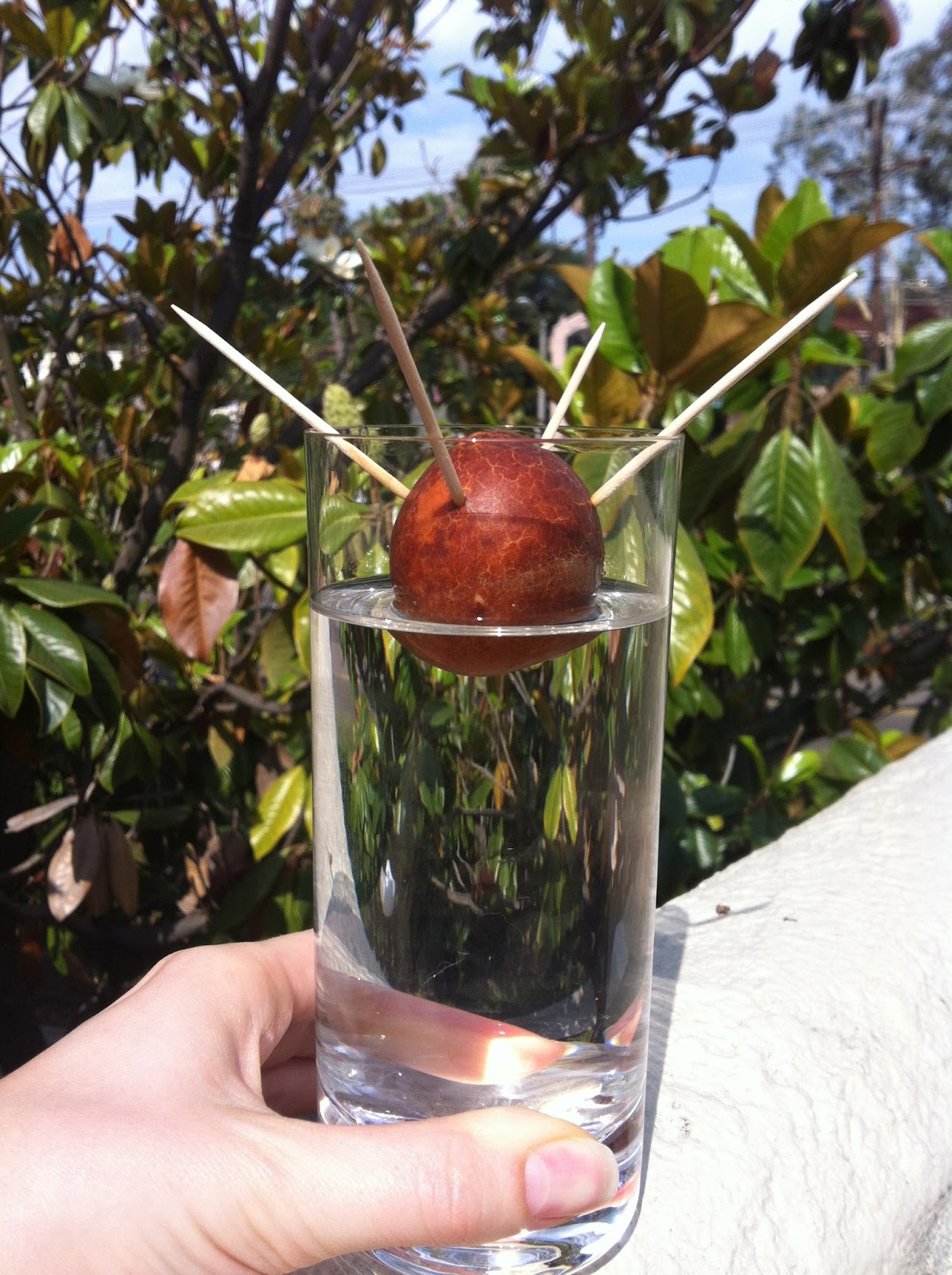
3) Press 4 toothpicks into the pit, half-way up and around the middle. Use them to balance the pit in a glass of water. The pointy side should be up, and the bottom quarter of the pit should sit in the water.

4) Let the pit rest in the water, keeping it at room temperature or warmer, for a few weeks. If you live in a colder climate or are doing this in the winter, you might want to use a heating pad or a grow lamp.

5) Refill the water as needed to keep the pit moist.

The pit will sprout roots, and eventually will crack in half with a sprout coming out at the top. This will probably take a few months. Once it sprouts, you can transplant it to a pot, gently covering the roots with soil and putting it in a place with plenty of sun.

Sprouting is the hard part, so once you have the sprout you can sit back and enjoy! Until next time, keep it clean!

Tuesday, July 2, 2013

Independence Day!

The Fourth of July is coming up quickly! Independence Day, more commonly known as The Fourth of July, is the celebration of the signing of the Declaration of Independence in 1776. The Declaration (you guessed it!) declared our independence from Great Britain as a free and sovereign nation. 

Fun Facts: 
  • Thomas Jefferson and John Adams both died on the same day, which happened to be the 4th of July.
  • James Monroe also died on a later 4th of July, making the 3rd President in a row to die on the 4th.
  • Calvin Coolidge is our only President to have been born on the 4th of July.
  • Congress actually approved the resolution for independence on July 2nd
  • Though the Declaration of Independence is dated July 4th, it's thought by historians that many of the signatures weren't added until August

Here's a fun traditional alternative to regular barbecue sauce for your picnics on Thursday:

Southern Mustard Barbecue Sauce
  • 3/4 cup yellow mustard
  • 3/4 cup cider vinegar
  • 1 tablespoon light brown sugar
  • 1 1/2 tablespoons unsalted butter
  • 2 teaspoons salt
  • 2 tablespoons Worcestershire sauce
  • 1 1/4 teaspoons fresh ground black pepper
  • 2 teaspoons hot sauce (to taste)
Combine all ingredients in a saucepan and whisk. Simmer, stirring occasionally, for 20 to 30 minutes. Let cool and store in the fridge.


And because it's inevitable:

How to Remove Barbecue Sauce Stains
  • Apply detergent to the affected area and soak in warm water for 15 minutes
  • Rinse out the detergent and scrub the area with white vinegar
  • Run through the wash like normal
And until next time, keep it clean!